

Brand Voice vs. Conversion Copy
Who would win!?

My 10 year old loved those Who Would Win books when he was younger. You know the ones? They’re all Dinosaur vs. Shark or Lion vs. Tiger.
And while most articles will tell you (quite rightly) that you need both brand voice and conversion techniques to write good copy, the truth is one usually needs to take precedence at any given time. And that’s what I’m interested in digging into today — who would actually win, at each part of the copy?
So let me tell you the working rules I came up with this week use when thinking about this:
Type of Copy/Content
The closer to the sale/the lower the funnel, the more conversion principles should win. So sales page, landing pages and launch emails will follow conversion rules more closely than a blog or newsletter email that can lean on brand voice more.
How closely does the brand voice align to the conversion principles in question? For example, a brand voice with naturally short sentences will more easily fit headline styles than a brand voice that runs long in sentence and paragraph length.
Places We Leverage Conversion within the Copy
Headlines, subheads, crossheads. These are written to be scanned and to encourage movement down the page. They usually have to be short and have a lot of jobs to do so brand voice is lower down the list.
Above the fold/Hero section. Generally this copy is made mostly of headlines, subheads, and eyebrow copy (so see above). If body copy is included, it usually runs short.
Bullet lists of features and benefits. Again copy is short here so is already doing a lot of heavy lifting.
CTAs. Following the short principle (again) but also, this is one of the closest pieces of copy to the sale or action, so the pressure to ensure conversion is highest here
Here’s an example from above the fold on Alex Catoni’s Copy Posse website:
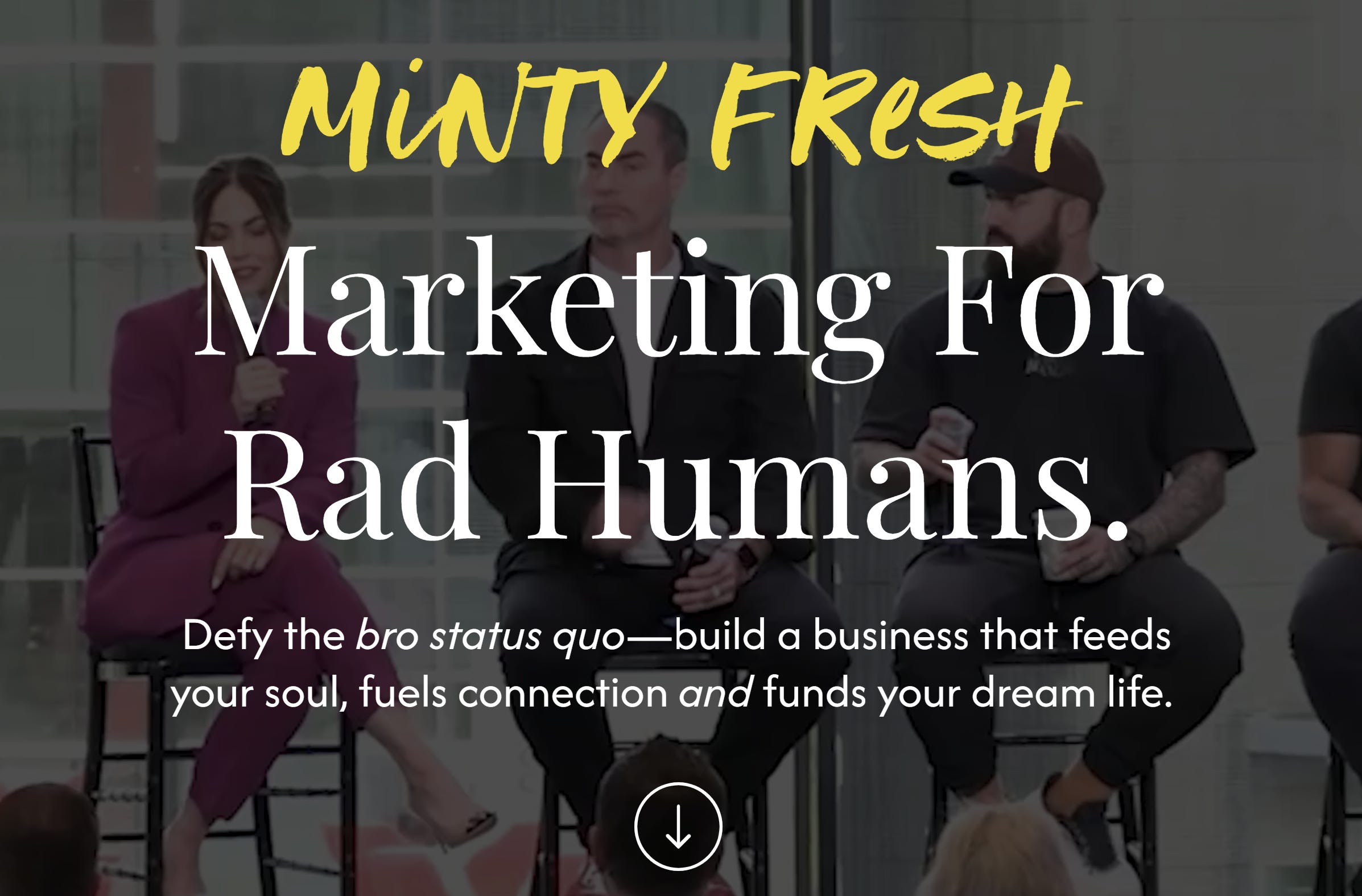
While it follows a standard format for eyebrow, headline and subhead, look at all those word choices that display her brand voice!
And here’s above the fold on one of her sales pages:

Now the copy is much more ‘buttoned up’ and focuses specifically on conversion principles with a clear CTA and no brand voice elements (although personality comes through in the visuals).
Places We Can Focus More on Brand Voice
About section. These often feel like a letter direct from the seller to the audience. It might shift to first person if the rest of the sales page or website is in third, and generally feels more intimate. When talking about what a brand or person thinks or feels, brand voice should naturally come through more strongly.
FAQs. This is another section that often feels more intimate, as if the seller is answering the questions directly. Because this is a place not just to address objections, but also to reassure a reader that they are in the right place, voice should come through more strongly.
Ways to add brand voice in conversion-heavy sections
Don’t! Brand voice is how we express brand personality through language. In some sections like the hero, there is very little ability to trade words or structure once you’ve added conversion principles. So you might find the visuals need to do the heavy lifting to display personality. Later, when you have more space, you can bring in brand voice.
Word choice. If you are limited in how many words you can use, the only way to add voice is by switching words. Is there a synonym that you could use that would more accurately reflect the voice? This might be a latinate vs. Anglo-Saxon choice — see this section from a Tony Robbins product:

For more on the difference between latinate and Anglo-Saxon words, check out this post:
Sentence structure. If your brand voice allows it, you might want to focus on sentence structure. For example, I edit for a brand where sentence fragments are defined in their voice guide as standard for headlines. This naturally leads to two fragment sentences in a headline (where other brands might use a colon or em dash). The repetition of this style makes framing headlines easy from a conversion principle and the consistency keeps the brand voice clear.
Punctuation, emojis, formatting. Some voices (mine!) use a lot of parenthetical asides. Some brands use emojis, or punctuation in the CTAs. Some. Would. Never. This can be an easy way to splash some brand voice in without messing with conversion principles.


If you’re documenting a brand voice
Document conversion sections in brand voice. Particularly for a brand that will have a lot of sales pages and launches, it is worth documenting specifically how conversion sections like headlines, CTAs, etc. sound in brand voice.
Educate your client. If you are working with someone who is uncomfortable with sales copy, it might be worth talking through various options of conversion sections (headlines, fascination bullets etc.) to find ones they like. I often find that asking them why they like or don’t like it will reveal some brand values/personality aspects that justify the choices.
For example, they might prefer that loftier latinate verb choice, they may prefer to focus on the positive of the benefit than sit in the pain of the before state, or put a parenthetical aside or hedged subhead in to soften a declarative statement. This is especially useful if you suspect (or want to pitch) that you will be using the brand voice guide to write for them, as it can reduce the back and forth in drafts by pre-clearing styles.
And as always — if you need help, I’m here! My editing support includes documents like brand voice and messaging guides.
Stuff I’m reading-watching-listening to
📖Night by Elie Wiesel. My 14 year old is reading this in English for their section on the Holocaust. It is absolutely devastating but such an important read.
📺 The Night Agent. I love thriller TV series based on books, especially when there are multiple seasons. It is exciting, but also safe, because we know they are not going to kill off the main character!
It’s time for recess

Let’s sell that brand voice!
I love to collect sales pages where brand voice is on display, because when done well, it is usually the sign of a strongly written piece of copy. Next time you see a sales page for a brand you know well and it has very little brand voice, think about how you would layer it in without breaking the conversion principles.
Spot on. So useful. Thank you!